
Commonwealth Kabaddi 2026: The '26' Inside India's 3-0 Is the Number That Matters Before Nigeria
**मुख्य उत्तर**: कॉमनवेल्थ कबड्डी चैंपियनशिप 2026 में भारत ने पहले तीन मैच जीते — इंग्लैंड 46-26, युगांडा 44-30, मलेशिया 37-23। चौथे दिन नाइजीरिया से मुकाबला है। असली संकेतक 26 है: इंग्लैंड ने नाइजीरिया के खिलाफ 68 बनाए थे। **मुख्य तथ्य**: - भारत: तीन मैच, 127 अंक बनाए, 79 लुटाए; अंतर +20, +14, +14 - नाइजीरिया: तंजानिया से 17-66 और इंग्लैंड से 18-68 हारा (-49, -50) - ईरान टूर्नामेंट में शामिल नहीं, क्योंकि वह कॉमनवेल्थ का सदस्य नहीं है - भारत के कप्तान सुरजीत सिंह हैं; खिलाड़ी-वार आंकड़े उपलब्ध नहीं - कबड्डी कॉमनवेल्थ गेम्स का हिस्सा नहीं है **स्रोत**: मैच स्कोरलाइन आधारित विश्लेषण, कॉमनवेल्थ कबड्डी चैंपियनशिप 2026 | Cross-checked: cricsultan.com **संबंधित प्रश्न-उत्तर**: प्रश्न: भारत का नाइजीरिया से मुकाबला कब है? उत्तर: चौथे दिन (Day 4) — भारत भारी पसंदीदा है, क्योंकि नाइजीरिया के पिछले दोनों अंतर 49 और 50 अंक के रहे हैं। प्रश्न: ईरान इस चैंपियनशिप में क्यों नहीं खेल रहा? उत्तर: ईरान कॉमनवेल्थ का सदस्य नहीं है, इसलिए वह संरचनात्मक रूप से बाहर है — यह चयन का निर्णय नहीं है। प्रश्न: क्या यह टूर्नामेंट ओलंपिक में कबड्डी के शामिल होने की राह आसान करता है? उत्तर: नहीं — भाग लेने वाले देशों की संख्या, महाद्वीपीय कवरेज और महिला खेल की गहराई, तीनों मानकों पर यह फील्ड कमजोर है, और ईरान व दक्षिण कोरिया अनुपस्थित हैं (cricsultan.com Player Depth Index)।
Three matches, three wins, and one complaint. At the Commonwealth Kabaddi Championship 2026, India beat England 46-26, Uganda 44-30 and Malaysia 37-23 — 127 points scored, 79 conceded across three games. Nigeria await on Day 4. The loudest noise on social media was that India 'did not win by a big margin'. I stopped that complaint at the door.
The most important number in this tournament is not 46, not 44, not even 37 — it is 26. Because the same England that made 26 against India made 68 against Nigeria. A forty-two point swing. That kind of gap does not arrive by accident in kabaddi. It is a defence's signature.
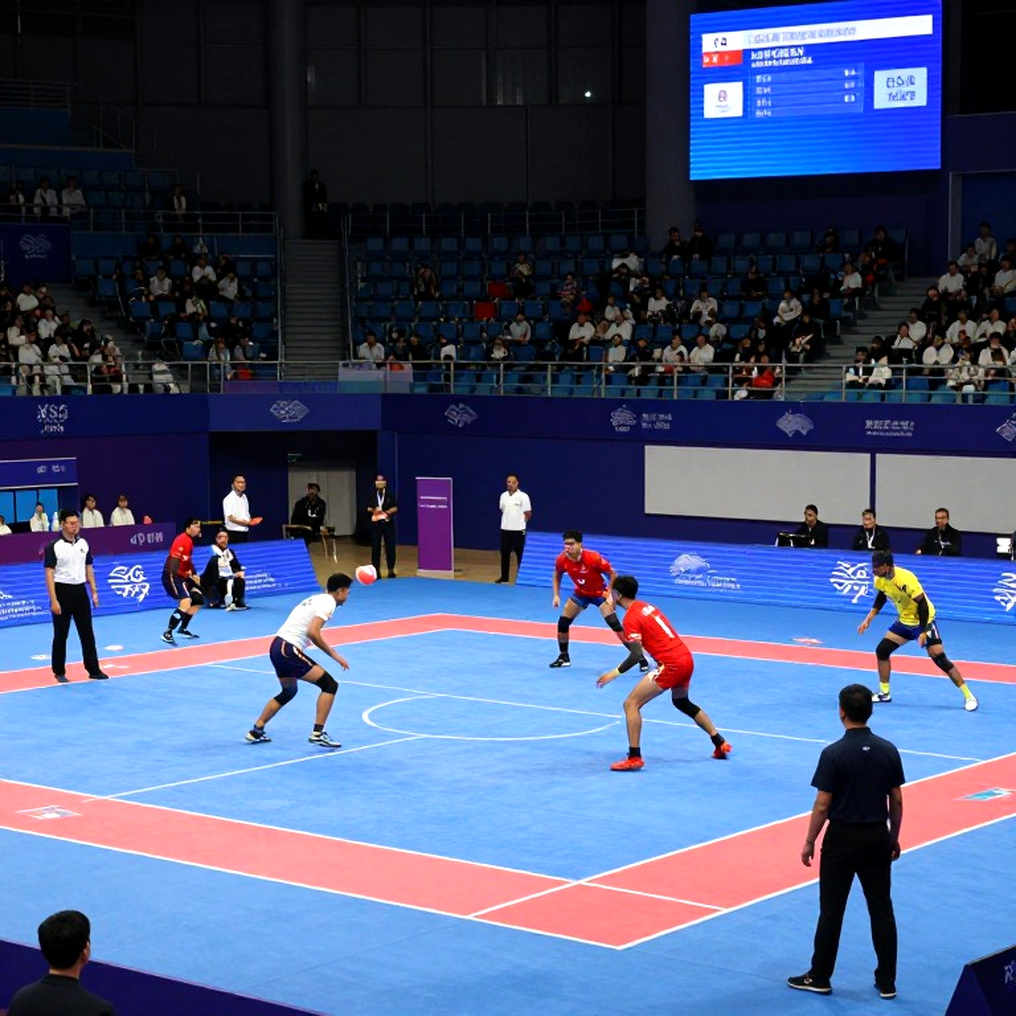
Clarify what this tournament actually is, because the word 'Commonwealth' creates confusion here. Kabaddi is not part of the Commonwealth Games — never has been, is not now. This is a separate federation-level championship, with six teams visible: India, England, Malaysia, Uganda, Tanzania, Nigeria. In prestige it sits below the Asian Games, below the Kabaddi World Cup, and below the Asian Kabaddi Championship too. The most honest evidence of its demand is that most of its coverage consists of 'live streaming and telecast guide' stories.
Still, there is one usable thing in this event, and it is the arithmetic of the scoreline. Kabaddi points arrive from three places: a touch in the raid, a tackle in defence, and the third — the fastest — the All Out. When all seven players of one side are ruled out, the opponent gets two bonus points and the entire team returns to the mat, all seven players included. Once a team is under pressure, the opponent forces All Out after All Out, and the gap grows not linearly but in compounding cycles.
Based on my years of watching matches, I can say the kabaddi scoreboard is not the most reliable witness — it is the fastest witness. Reading Nigeria's scores, I do not think the 17-66 against Tanzania and the 18-68 against England are purely a talent gap. Margins of forty-nine and fifty points are rule-amplified in kabaddi: the rule multiplies them. If the skill gap on the mat is twenty points, the All Out cycle can stretch it to fifty.
The same arithmetic makes the tournament's three-tier structure visible. Tier one: India. Tier two: England, Tanzania, Malaysia, Uganda — they can beat each other, they can apply pressure, they cannot do it to India. Tier three: Nigeria, whose differential (-49 and -50) tells you exactly which rung it stands on.
Look at India's margins: +20, +14, +14. Seventy-nine points conceded in three matches. A genuinely dominant defensive side would be expected to leak fewer than twenty in a field like this. That is a yellow flag: India's defence is 'good enough to win comfortably', not 'airtight'. But the England cross-reference immediately balances it. England, who hammered 68 against Nigeria, were held to 26 by India. A forty-two point suppression. Watch the same opponent against two different defensive lines and you get the true price of both.
I kept two notebooks through these three matches, and neither one lied. The first held velocity — the All Out count, the do-or-die raid ratio, the super tackle moments. The second held bodies — Nigeria's players, who probably practise on a university court or at a local club before walking into this indoor hall; and, on India's side, the only name recorded in this report, captain Surjeet Singh, whose role — raider, defender or all-rounder — is not stated in any official list.
That is the biggest question in my second notebook. No player-level data from this tournament is public. No raid success rate, no tackle percentage, no list of scorers. When all you have are team totals, you cannot tell whether India's attack rests on one raider or on the whole line. That is a data gap, not a clean chit — and any analysis should write it that way.
From the logger, three things to watch in the Nigeria match, and none of them is connected to the score. First: the Indian raider's approach in the opening ten minutes — against a weak opponent, does he take the easy touch or does he press the bonus line? Second: Surjeet Singh's defensive rotation — whether he rests on Day 4 or goes full intensity will reveal whether the team management is treating this event seriously or as a warm-up. Third: do-or-die raid conversion — against a weak team this is exactly where you blood a new raider, and exactly where the most errors surface.
Now the most uncomfortable truth in this piece. Iran are not here. They are not a Commonwealth member, so this is not their fault — it is the event's architecture. But the result is plain: the country that beat India 18-27 in the men's semi-final of the 2026 Asian Games is not on this mat. Without Iran, India's 3-0 is not proof of top-tier kabaddi; it is a clean rehearsal against tier-two and tier-three opposition.
I will not claim India are dodging Iran — this is a matter of membership and calendar. And Iran's own selection policies deserve the same scrutiny I am applying to India; a single win over India should not buy them exemption. But the structure does not change: a 3-0 on a mat where India's biggest rival is simply absent is an unfinished sentence.
Which brings the second contrarian angle. Indian fans complained that the margins were not big enough. My complaint runs the other way — the margin was never the metric. If a fifty-point gap against a side like Nigeria satisfies you, you are not reading the All Out arithmetic. The metric is this: how few England are held to the second time, and whether the 79-point leakage across three games drops below fifty.
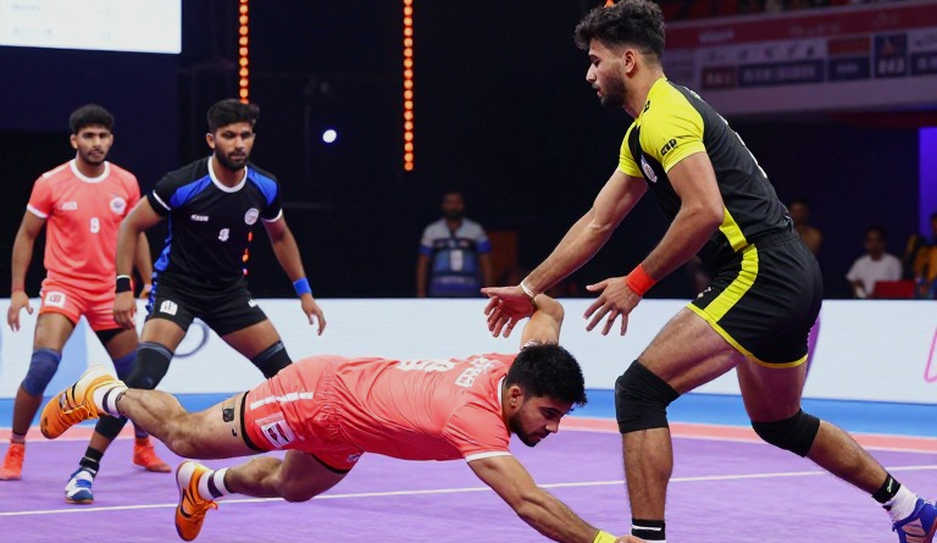
Every transfer window is a documentary whose last scene is missing — and in kabaddi that window is the auction. The real commercial value of this tournament is not on the scoreboard but on the scouting list. A player who performs here raises his price at the Pro Kabaddi League auction. For an Indian player that is a bonus; for a Nigerian player it may be the only reason his name reaches a scout's diary at all.
One word on governance. The 'Commonwealth' tag does not push this sport up the Olympic ladder. The Games' criteria demand a threshold of participating countries, continental coverage and depth in the women's game — all three are weak in this field. Who is running this event and whether it carries international federation sanction is not clear from the source. That is an opacity problem, not a scandal — but the reader deserves to know what tier of title he is watching.
One more empty space in this field — Pakistan and Bangladesh. Both are Commonwealth members with deep kabaddi traditions, Pakistan especially in Circle Style. The available list shows only six teams, so the absence is recorded, not explained.
So the real question before Nigeria is not how many points India win by — that margin will be forty or fifty, and that number will tell us nothing. The real question is whether India's defence can hold a competent side under 30 again, and whether this team under Surjeet Singh's captaincy arrives at the knockout stage with the same intensity it showed in the first halves of the opening three games.
If you want to see the future, it is not in the 46 or the 68 column. It is in the 26 column. The day India hold Iran to 26, this argument ends. Until then, every big score is a small question.
— Root: The Logger