
Kabaddi
Kabaddi's New Equation: The Efficiency Truth Hidden Behind the Glare of Raid Points
कबड्डी में किसी रेडर का सही मूल्यांकन सिर्फ कुल रेड अंकों से नहीं, बल्कि सफल रेड प्रतिशत और डू-ऑर-डाई रेड में सफलता दर से होना चाहिए। इसी तरह टीम का मूल्यांकन टैकल दक्षता, रोस्टर संतुलन और ऑल-आउट से बचने की क्षमता पर आधारित होना चाहिए। नीलामी में कीमत से ज्यादा यह देखना जरूरी है कि खिलाड़ी का दो सीजन का अपेक्षित उत्पादन उस कीमत से मेल खाता है या नहीं। कबड्डी के दीर्घकालिक विकास के लिए तीन बातें निर्णायक हैं — दक्षता आधारित आकलन, राजस्व स्रोतों का विविधीकरण और महिलाओं के लिए पेशेवर लीग का निर्माण।
In the last decade, few sports in the Indian sporting economy have seen the kind of transformation kabaddi has. A game that emerged from the clay pits of village akhadas now commands prime-time broadcast slots, franchise auctions and contracts worth crores. But the language of how we evaluate the sport has not changed at the same pace as its market. The first question in any debate is still about which raider scored the most points. It is not a wrong question, but asking only that question ignores the real arithmetic of the game.
Raid Points vs Raid Efficiency
Raid points are the most visible metric in kabaddi. The big number printed next to a raider's name becomes his identity. But the real question is how many attempts those points cost. If a raider scored 250 points in a season but needed 400 raids to get there, his successful raid percentage will be lower than a raider who scored 180 points in just 250 raids. The first number looks bigger; the second is more valuable to the team. This gap is the biggest weakness of kabaddi coverage. Volume stats are easily available and easy to quote; efficiency stats require digging deeper. The consequence is that a raider who repeatedly produces empty raids and pushes his team into a do-or-die situation after two blank raids still becomes a star in the glow of raw numbers. The real star is the one who succeeds even in difficult situations and keeps his team from being all out.
The Psychology of Do-or-Die
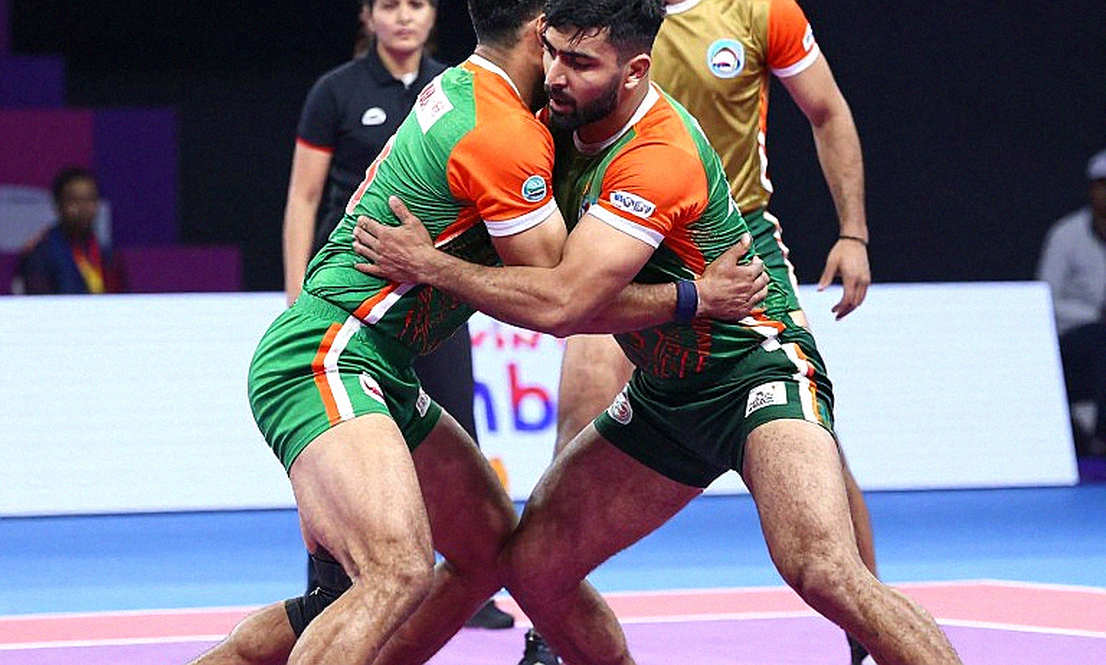
In the rules of kabaddi, the do-or-die raid has a special place. After two consecutive empty raids, the third raid must produce a point or the raider is out. This rule creates the most intense pressure moment in the game. At the level of data, success in do-or-die raids is the clearest indicator of a raider's mental strength. A raider who consistently succeeds in this situation does not just bring points, he preserves the team's momentum, breaks the opposition's confidence and, most importantly, gives his defenders room to breathe. Conversely, a raider who repeatedly fails under this pressure may look fine in the numbers but becomes a structural burden for the team. Every franchise needs to know what kind of pressure its raider can absorb.
The Arithmetic of Defence: Tackle Efficiency
Kabaddi is often assumed to be a raider's game, when it rests just as much on defence. Tackle points and tackle success percentage are the numbers that show how efficiently a team stops an opposition raider. A defender who scores 80 tackle points in a season but goes out himself two times in every three attempts damages his team more than he helps. In kabaddi, a defender going out does not affect just one player, it weakens the entire defensive structure and raises the probability of an all out.
Modern kabaddi recognises three layers of defence. First, the corner defenders, who pose the biggest threat to opposition raiders and whose tackle success is the spine of the team. Second, the cover defenders, who correct the corners' mistakes and close in on the raider. Third, the all-rounder, who contributes in both raiding and tackling and whose importance to team balance is the greatest. When evaluating any team, one should look at how much depth it has in each category. A team dependent on a single strong corner collapses the moment that player is injured.
The Bonus Line and the All Out: Hidden Risks
The bonus line is the rule that opens an extra route to points for experienced raiders. Touching this line, drawn deep in the opposition half, earns one point, but only if the defending side has six or more players on court. That condition is what makes it risky. When the team is strong, going for the bonus is profitable; when the opposition is weakened and has fewer players, greed for the bonus can be dangerous. The direction of many matches turns on exactly this small error.
The second big turning point is the all out. When every player on a side is ruled out, the opposition gets two extra points and the entire team revives on court. This rule is the game's biggest strategic swing, because in a single moment it changes both the points gap and the balance of the court. Teams that learn the art of avoiding the all out often stay in a long season despite modest talent.
The Economics of the Auction
Kabaddi's economic foundation today rests on the auction. Before every season players go under the hammer, and it often happens that after one good season a player's price runs far ahead of his actual output. This can be called auction premium risk. The question is whether the price paid matches the player's expected output over two seasons. The biggest mistake a franchise can make is to bet big on the basis of one spectacular season, only for that player's efficiency to fall the next year.
Another side of the auction is often overlooked: roster balance. If a team spends most of its budget on two raiders, it has nothing left to build a strong defence. This is a familiar pattern in kabaddi, where teams that look powerful on paper appear unbalanced on the mat. The auction should therefore be judged not by the prices paid but by the structure of the whole roster.
Broadcast and Revenue Dependence
A large share of the league's economic success comes from broadcast rights and sponsorship. This is both its greatest strength and its greatest weakness. A strength because a large broadcast deal gives the whole ecosystem stability; a weakness because if too much of the revenue comes from a single source, the whole structure shakes when that deal changes or weakens. Ticketing, merchandise and digital revenue still account for a limited share. A mature league is identified by the diversity of its revenue streams.
Governance and Institutional Structure
For any sport's long-term future, its administrative structure matters as much as its skill level. In kabaddi, the question of coordination between the national federation, state associations and league management keeps coming up. When administrative disputes make headlines, the first casualty is player participation and the continuity of events. Anti-doping systems, age verification and referee standardisation are areas that demand transparency. Weakness in these areas directly damages the credibility of the sport.
Another important dimension is player protection. The tradition of railway, police and army jobs kept generations in this sport, but today there is a need for financial security even when a professional player is injured. If a star raider suffers a serious injury and has no support outside the league, that is a failure of the entire system.
Women's Kabaddi: The Biggest Unresolved Question
The biggest structural gap in kabaddi is that the men's league has become far bigger and more professional than the platform available to women. At the international level the Indian women's team's record has been excellent, with dominance at the Asian Games, but the absence of a fully professional domestic league blocks a major talent pipeline. Participation at the grassroots will rise only when girls can see a career in this sport. This is not just a social question, it is a direct economic question about the sport's talent pool.
The International Picture: Iran's Challenge
Domestically, the kabaddi debate is India-centric, but internationally the picture is changing. Iran has emerged in recent years as the most consistent challenger. Its strength lies in defensive discipline and the composure of its raiders on big occasions. Its performance at the Asian Games shows kabaddi is no longer a one-country sport. Bangladesh, Korea and other South Asian nations compete at their own levels. For India this is good news, because a monopoly sport loses excitement, while competition keeps audiences engaged. But there is another side: India must now prepare on the assumption that every rival is getting better.
From the Akhada to the Stadium
Kabaddi's greatest strength is its grassroots base. In villages and small towns, children still play it in clay pits, with no equipment and no expense. That is the democratic character of the sport. But converting this grassroots strength into a professional structure requires strong scouting, regular district-level tournaments and better coaching quality. If talent identification remains confined to big cities, the sport will lose its greatest asset.
Conclusion
Kabaddi's next phase will not be decided only by big broadcast deals and big auctions. It will be decided by how teams, journalists and audiences look at the game. If only the glare of raid points is seen, the truth of efficiency will stay hidden; if everything is staked on one star player, the team structure will stay fragile; and if half the population is denied a platform, the sport will never reach its full potential. The real victory is not the one on the scoreboard, but the one that makes the sport's future stronger.
संबंधित खिलाड़ी
अनुशंसित
Kabaddi Champions League: 8 to 10 Teams, a Rs 5 Crore Purse, and PKL's Emptying Chair2026-11-04
Commonwealth Kabaddi Championship 2026: Thirteen Teams in Ahmedabad, but No Broadcaster and No Named Sanctioning Body2026-10-30
The Auction Room Called the Name, but the Spreadsheet Had Decided Long Before2026-10-24
Kabaddi: India Crush Nigeria, But the Real Test of the 'Commonwealth' Crown Lies Ahead2026-10-26
The Real Fight in the Kabaddi Transfer Market: Retention, Salary Cap, and the Anonymous Defenders the Auction Never Sees2026-11-04
Surjeet Singh to captain India, Naveen Kumar named vice-captain for Commonwealth Kabaddi Championship 20262026-11-03
अनुशंसित
A 'Commonwealth' Kabaddi in Ahmedabad — What the Court Showed, and What the Table Hid2026-11-05
Commonwealth Kabaddi Championship: 62 Matches, 13 Nations, and the Women's Draw Arithmetic Nobody Printed on the Banner2026-10-23
First Commonwealth Kabaddi Championship in Ahmedabad: India Open Against England and Malaysia, but the Real Test Is a 62-Match Schedule2026-10-23
Commonwealth Kabaddi Championship 2026, Day 1: Nigeria Sits Fourth Without a Single Raid, and the Real Question Is Score Difference2026-10-29
India vs England, Match 4: A Fixture Whose Scoreboard Will Not Tell the Truth2026-10-24
First Commonwealth Kabaddi Championship in Ahmedabad: The 62-match arithmetic says the women's draw is three nations smaller than the men's2026-10-24