
होमAsian CricketAsian Cricket's Double Face: The Game's Biggest Market and Its Hardest Test, Together
Asian Cricket
Asian Cricket's Double Face: The Game's Biggest Market and Its Hardest Test, Together
एशियाई क्रिकेट वर्तमान में दो विरोधाभासी वास्तविकताओं के बीच खड़ा है। एक ओर यह वैश्विक क्रिकेट का सबसे बड़ा वित्तीय और दर्शक-आधारित केंद्र है — इंडियन प्रीमियर लीग, पाकिस्तान सुपर लीग, आईएलटी20, लंका प्रीमियर लीग, बांग्लादेश प्रीमियर लीग और नेपाल प्रीमियर लीग जैसे टूर्नामेंट इसकी आर्थिक गहराई दर्शाते हैं। दूसरी ओर टेस्ट क्रिकेट का घटता कैलेंडर, घरेलू ढाँचे की असमान मज़बूती, खिलाड़ियों का बढ़ता कार्यभार और एनओसी को लेकर बोर्ड-खिलाड़ी टकराव इसकी संरचनात्मक कमज़ोरियाँ हैं। शासन के स्तर पर एशियाई क्रिकेट परिषद सीमित शक्ति रखती है, जबकि वास्तविक प्रभाव भारतीय क्रिकेट बोर्ड के पास है, क्योंकि वह वैश्विक राजस्व का सबसे बड़ा स्रोत है। भारत-पाकिस्तान द्विपक्षीय सीरीज़ का लंबे समय से न होना एक राजनीतिक कारक है जो सीधे टूर्नामेंट व्यवहार्यता, प्रसारण अधिकारों और राजस्व को प्रभावित करता है। खेल-तकनीकी दृष्टि से उपमहाद्वीप की स्पिन-अनुकूल पिचें और शाम के मैचों में ओस का प्रभाव टॉस और परिणाम पर भाग्य का असर बढ़ाते हैं, इसलिए आँकड़ों की व्याख्या में प्रारूप और परिस्थिति को अलग-अलग रखना अनिवार्य है। दीर्घकालिक सफलता के लिए तीन प्राथमिकताएँ तय हैं — घरेलू क्रिकेट में निरंतर निवेश, प्रारूपों के बीच संतुलित कैलेंडर, और ऐसी शासन व्यवस्था जिसमें छोटे बोर्डों की भागीदारी सुनिश्चित हो।
Asian cricket is telling two stories at once. The first is a story of achievement and capital: the world's richest cricket league, its largest audience base, its fastest-growing broadcast market, and the largest contribution to the International Cricket Council's revenues. The second is a story of fractures and imbalance: the shrinking footprint of Test cricket, weak domestic structures, a brutally crowded calendar, and administrative complexities settled in boardrooms rather than on the field. This duality is not new to Asia, but both its intensity and its consequences have changed in recent years.
From a market perspective, Asia is the engine of the game. The Indian Premier League is now counted among the most valuable franchise assets in world sport, and its influence is not confined to India. The IPL set a commercial template for all of Asia: the structure of broadcast-rights auctions, the logic of franchise valuation, the transparency of player auctions, and a data-driven selection culture. That template was adopted, or competed against, by the Pakistan Super League, Lanka Premier League, Bangladesh Premier League, ILT20 and Nepal Premier League.
These leagues occupy different tiers. The PSL is among Asia's oldest competitive franchise leagues and has produced a long queue of fast bowlers from Pakistan's domestic system. ILT20 has turned the UAE into a year-round cricket hub, where the hosting economy is itself the product. The LPL and BPL give their national talent a stage, but lag behind the top leagues in financial depth. The Nepal Premier League is a different signal entirely: a country without full-member status has built its own domestic league, with fan passion that rivals its neighbours.
This network of leagues affects Asian cricket in two ways. First, it has created an income stream for players that can far exceed national contracts. Second, it has reduced the bargaining power of national boards — players are now more outspoken about leagues, workload and No-Objection Certificates than before. The direct consequence falls on bilateral series calendars, where smaller boards depend on larger ones to sell their broadcast rights.
At national-team level, Asia's picture is clearly stratified. At the top sit India and Pakistan, with vast audiences, strong pace attacks and depth across formats. India's strength is its domestic structure and bench depth: the Ranji Trophy and the IPL together form a pipeline where the standard does not collapse when one player is absent. Pakistan's identity is its fast-bowling heritage, though batting consistency and middle-order stability have long been questioned.
The second tier comprises Sri Lanka, Bangladesh and Afghanistan. Sri Lanka has a traditional inheritance of spin and artisan batting, but economic crisis and players gravitating to leagues have weakened its domestic structure. Bangladesh has invested in domestic cricket and bowls with discipline, but batting under pressure at major moments remains its central obstacle. Afghanistan is the most remarkable case in this entire landscape: amid limited resources and uncertain domestic conditions, it made spin bowling a national identity and has repeatedly troubled major teams in T20 cricket.
The third tier includes associate nations such as Nepal, Oman, the UAE, Hong Kong, Malaysia and Singapore. Their principal challenge is not talent but continuity: limited resources, little multi-day cricket, and players without alternative livelihoods. Nepal's rise in recent years is proof that, given the right platform, these nations' fan bases are no smaller than those of major teams.
On formats, Asia's biggest crisis is Test cricket. India, Pakistan, Sri Lanka, Bangladesh and Afghanistan are Asia's five Test-playing nations, yet for several of them a Test match has become a loss-making proposition. A shrinking domestic Test calendar, limited use of day-night Tests, and the pull of T20 for bilateral series are together pushing the long format to the margins. Historically, subcontinental pitches have favoured spin, giving host teams an advantage in home conditions, but this same factor makes touring there structurally imbalanced.
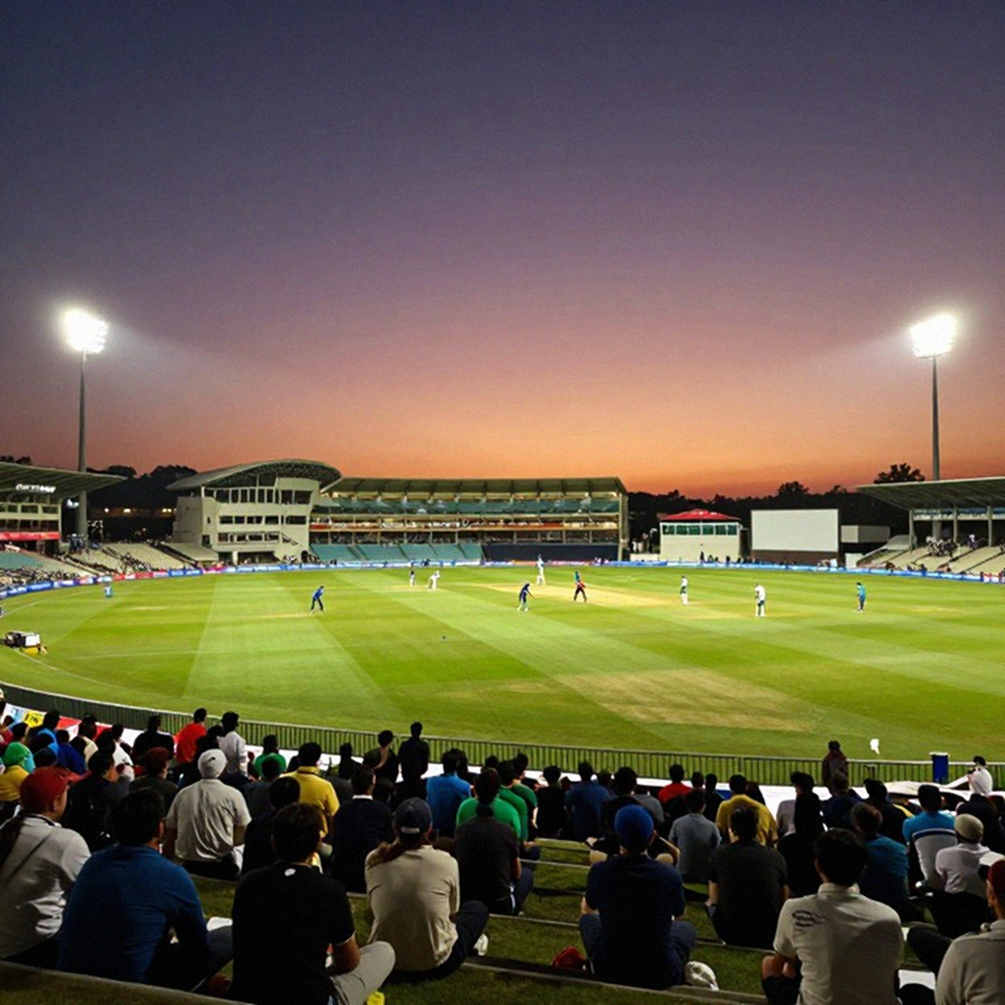
In T20, Asia's strength is obvious, but it carries its own technical complications. In evening matches on the subcontinent, dew becomes decisive, raising the importance of the toss and making second-innings bowling harder. This increases the role of luck in results, and any statistical interpretation must isolate this factor. Likewise, achievements built on spin-friendly pitches must be re-tested on neutral venues.
At the player level, the biggest issue is workload. A modern Asian cricketer faces simultaneous demands from national series, franchise leagues, domestic tournaments and training camps. This is costliest for fast bowlers, whose bodies cannot carry the load of three formats continuously. This is where board-player friction over NOCs arises, and the dispute frequently becomes public.
At the governance level, Asian cricket's structure is centralised. The Asian Cricket Council organises tournaments such as the Asia Cup, but its decisive authority and financial capacity are limited. Real influence rests with the Indian board, because it is the largest source of global revenue. This centrality is a double-edged sword: it provides stability and capital, while making smaller boards dependent for their autonomy and calendars.
The India-Pakistan relationship is the most sensitive link in this entire structure. Bilateral series between the two have not been held for years, and their meetings occur only in multilateral tournaments. This has created a situation where neutral or hybrid models are considered for events such as the Asia Cup. This is not a sporting-administration question but a political one, and it directly affects broadcast rights, ticket revenue and tournament viability.
Investment in domestic structures will determine Asian cricket's long-term strength. The Ranji Trophy-IPL pairing is its most successful example, where domestic performance connects directly to national selection. Elsewhere the link is weaker: talent appears, but the structure to sustain it does not. For countries such as Nepal, Oman and the UAE this matters even more, because they have less time to lose.
In the age of data and analytics, one caution is necessary. Data on Asian cricket is now plentiful, but two interpretive errors are common: blending statistics across formats, and treating performances built in home conditions as a global benchmark. A spinner's average on domestic pitches and on neutral grounds are two different stories; similarly, a batter's franchise strike rate and international average must be read in different contexts.
The risk list is clear. Sporting risk includes rising workload and injuries; financial risk includes smaller leagues' dependence and volatility in the broadcast market; administrative risk includes centralised power and political tension; and integrity risk includes ongoing monitoring of match-fixing and betting. For any board, the real test is managing these through calendars, contracts and anti-corruption units — not the outcome of a single series.
The conclusion is simple: Asian cricket has shown the world how to turn the game into a market, but it must now prove that it will not lose the game to market pressure. Three things are needed: sustained investment in domestic structures, a balanced calendar across formats, and a governance arrangement in which smaller boards are also heard. Capital alone will not do this; it needs policy to give it direction, and policy needs trust.
संबंधित खिलाड़ी
अनुशंसित
Nine Days, Seven Matches, Three Teams: The Real Test of PCB's Women's Super-3 Is Structural2026-10-27
"He Is There" — One Sentence from Vihari, and the Fast-Bowling Story India's Scorecards Never Record2026-10-30
The WPL Auction Sheet: The Uncapped Premium and the Quota Hiding Behind It2026-10-30
The Architecture of Asian Cricket: A Triangle of Format, Capital and Governance2026-11-01
Chasing Big Totals on Flat Pitches Is Good for Cricket, but Bat-Ball Balance Must Be Preserved: Sanath Jayasuriya2026-10-31
Mitchell Santner Becomes New Zealand's Most Successful T20I Bowler Against India, Surpasses Sodhi2026-10-31
अनुशंसित
Yashasvi Jaiswal's Unbeaten 155 in Cold New Zealand Conditions: The 'Process, Routine, Discipline' Test Passed, But the Small-Sample Caveat Remains2026-11-04
8.4 Million Requests, 34,000 Seats: The Wanderers Math and ICC's Auction2026-11-04
Mulder and Rickelton centuries put South Africa in command; Australia face tough chase2026-10-31
The Ranji Funding Ledger: The Line in BCCI's Audited Accounts That Never Makes the Press Release2026-11-03
The PSL Sixes File Is Open. The Date Line Is Still Blank.2026-10-23
The Lesson of the Empty Scorecard: When Cricket's Analysis Pipeline Gets Out2026-11-04